
Brunswick FACILITY
Since ceasing active manufacturing in 2023, the Brunswick facility has undergone a massive transformation. Stump piles are gone, water towers are down, and the buildings are razed. Meanwhile, remediation of the soil at ground level and the groundwater below the ground continues.
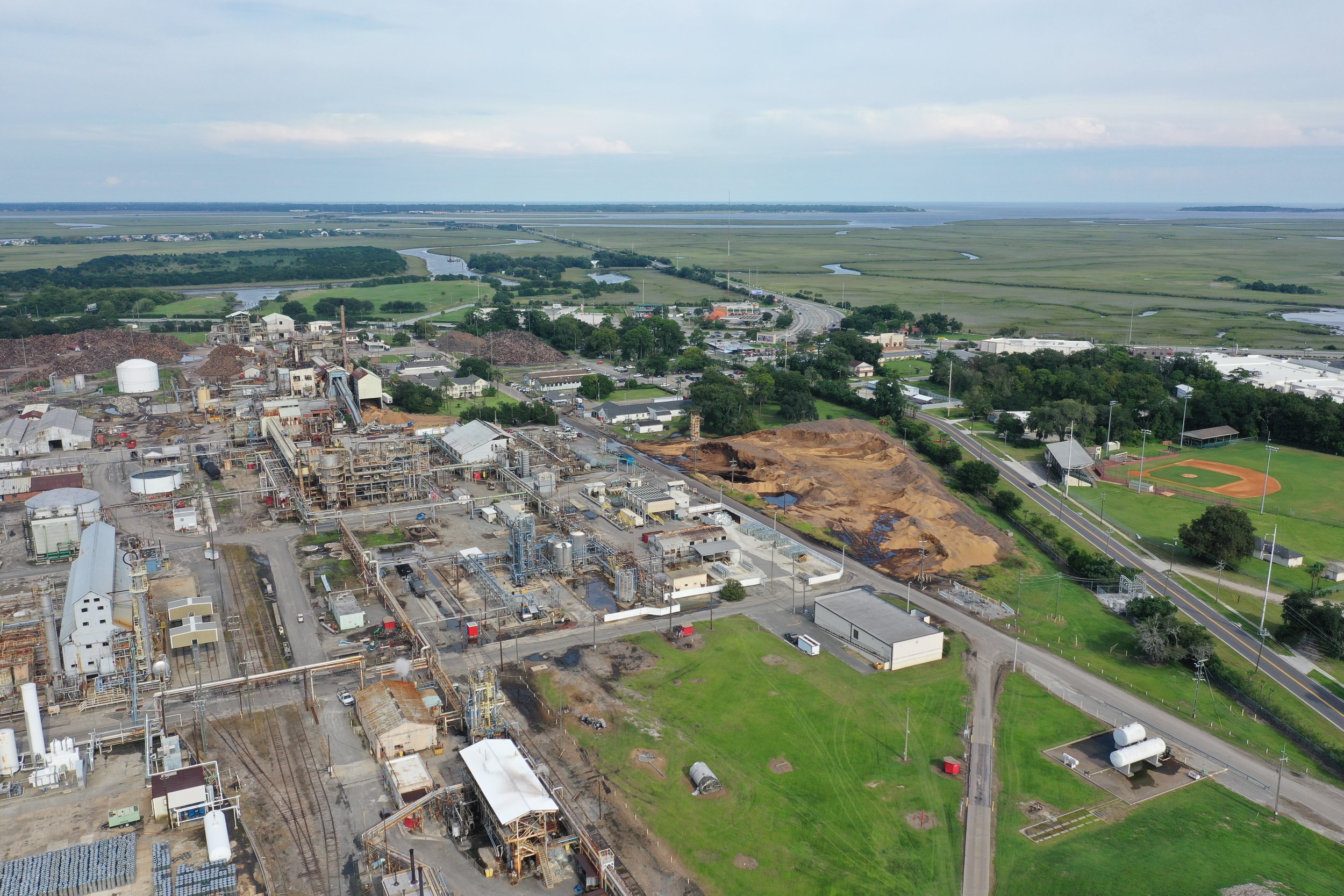
Central area of the facility during demolition (2024)
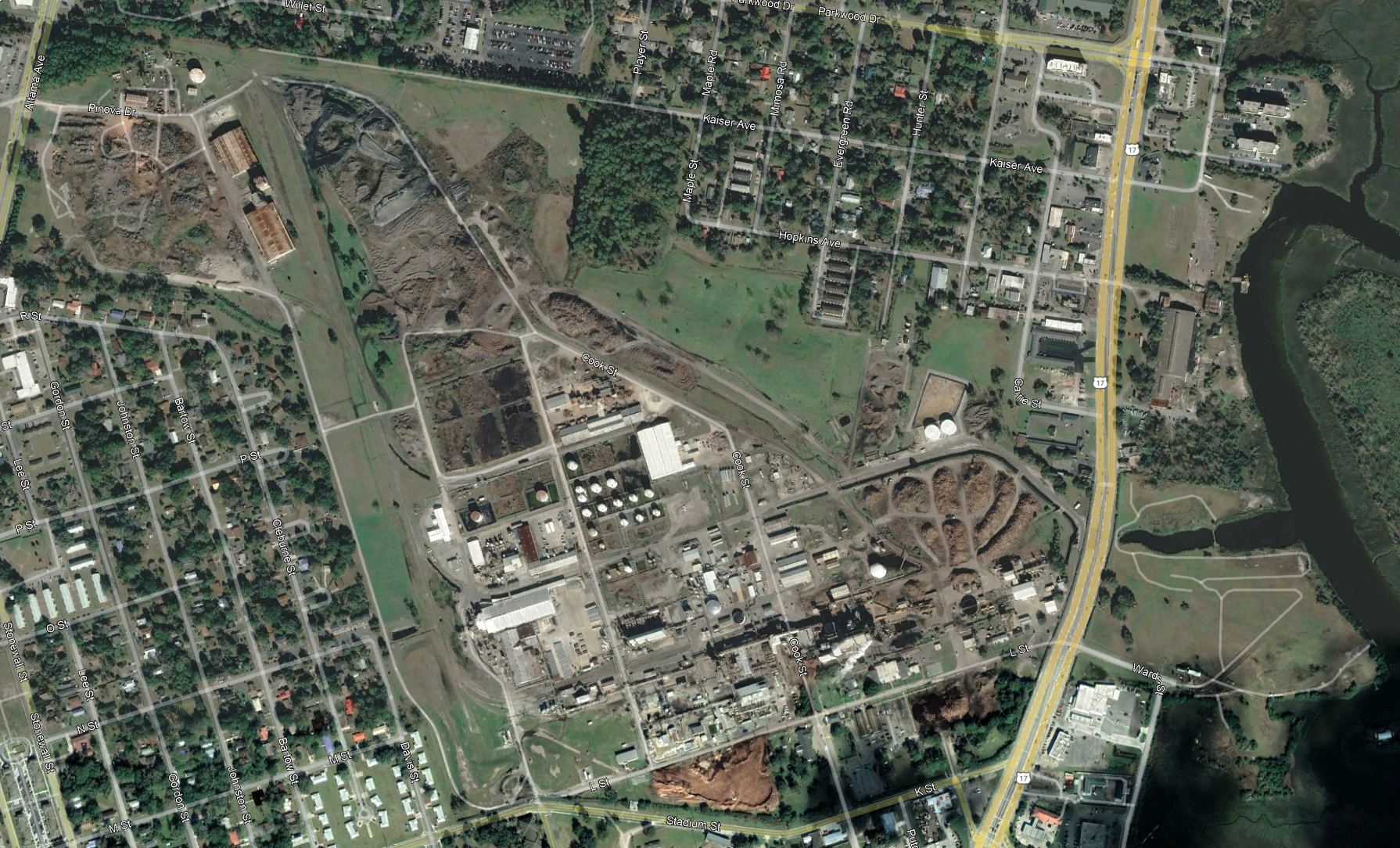
Google Earth image of the facility before demolition (2022)
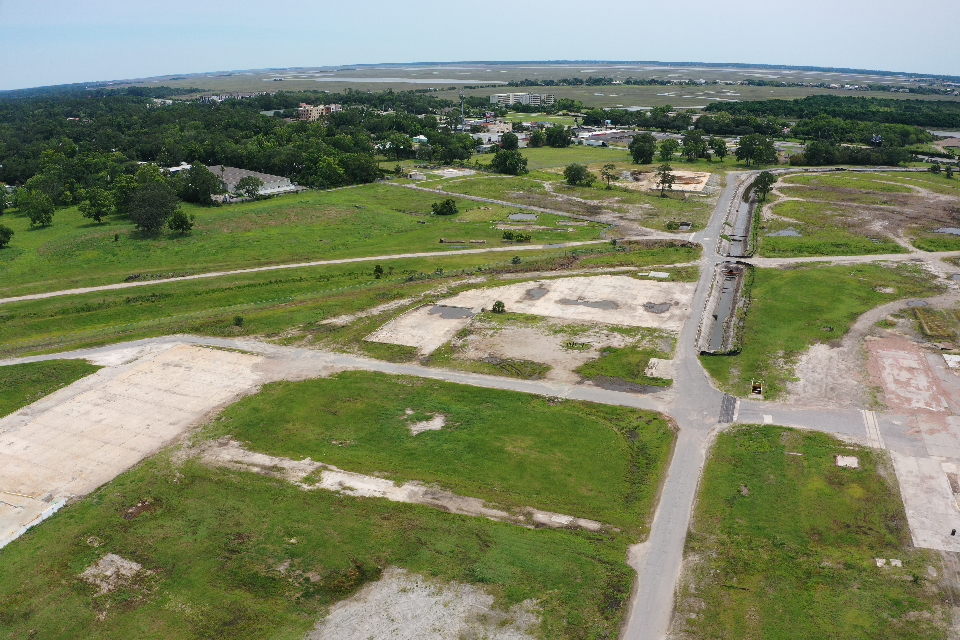
Central area of the facility after demolition (2025)

Google Earth image of the facility after demolition (2025)
EPD re-issued the hazardous waste permit for the Brunswick facility in December 2022. Despite its name, the “hazardous waste permit” reflects the fact that neither Hercules nor Pinova is storing hazardous waste at the Brunswick facility, as was done in the past. The permit includes an adaptive Corrective Action Plan (CAP) for comprehensive remediation of the facility that took into account feedback received during the 2021 public review process.
The CAP outlined five pillars of environmental remediation to be accomplished by Hercules:
addressing soil impacts near a former tank farm;
sitewide soils across the former facility;
shallow groundwater;
deep groundwater; and
potential vapor intrusion at certain former facility buildings.
The work called for by the CAP in all five areas has since been completed. Due to the success of the deep groundwater remediation, Hercules voluntarily expanded this work and began field testing an additional groundwater remedy. This continued even as the plant was actively being closed and demolished. Shallow groundwater remediation efforts yielded modest improvements, and further work is under way to enhance this performance.
Following the unexpected closure of the plant, Hercules and Pinova are now working to continue remediation with an eye toward future sale and redevelopment of the former plant property.
What’s been done and what’s next
Since the 1980s, Hercules has remediated more than 60,000 tons of potentially contaminated soil at the Brunswick facility and actively remediated groundwater sources on-site and at its boundaries. In 2021, Hercules remediated soil in several areas and installed vapor intrusion mitigation systems at various buildings on-site. In 2022, Hercules obtained EPD’s approval of its CAP. From 2022 through 2026, Hercules implemented key aspects of the CAP, including three groundwater remediation plans, completed removal of contaminated soils from various locations across the facility, and completed remediation of a former tank farm area.
Following the decommissioning of the plant, Hercules compiled all the testing data into a risk assessment report and submitted this to EPD. Once approved, this report will enable Hercules to develop final remediation plans which will first include development of a soil work plan to further characterize areas of the site that may need to be addressed based on conclusions from the risk assessment. Following completion of this supplementary investigation, Hercules will initiate additional corrective action at the site which would include additional excavation, capping, or institutional controls.
Soils
In 2021, Hercules removed substantial amounts of waste from the former toxaphene tank farm area.
Also in 2021, Hercules completed an in-situ solidificationremedy for soils impacted by toxaphene. The remedy creates a solid, weather-resistant block that solidifies the soils in place to prevent future exposure while also preparing the area for potential reuse.
The CAP outlines the process for how Hercules will identify additional soil areas for remediation and the technologies it may deploy as needed. In 2023, Hercules implemented a plan that excavated and removed additional soils throughout the site. Additional targeted soil removal work occurred in 2025 at the Marsh Yard property east of Highway 17 and adjacent to Dupree Creek.
Groundwater

More than 100 wells monitor groundwater movement and quality.
Hercules investigates and monitors groundwater at the Brunswick facility and off-site areas through a network of more than 100 monitoring wells. The impacts caused by historical activities at the Brunswick facility are generally limited to the upper surficial aquifer - roughly the first 100 feet below the ground surface.
The impacted groundwater instead sits in the shallower surficial aquifers, located in the eastern portions of the Brunswick facility. Due to their proximity to the ocean and tidal creeks, water in surficial aquifers is naturally brackish, with an unpleasant taste. Because of this, drinking water is drawn from the Upper Floridan aquifer (seen in the figure below), which lies at least 500 feet below the ground surface, well below the site’s impacted groundwater zone. Thick layers of clay, called “confining units,” separate the various aquifers and prevent surface contamination from reaching deeper aquifers. Furthermore, the property’s environmental covenants prohibit using groundwater for drinking water.
In 2022, Hercules confirmed that a few private water supply wells located on Terry Creek Road, east of the facility, draw water from the Upper Floridan aquifer, which is not affected by the facility. As a conservative measure of protection, two of these wells were nonetheless replaced with even deeper wells.
Thick layers of clay, called “confining units,” separate the various aquifers and prevent surface contamination from reaching deeper aquifers.
Layers of Water and Rock beneath Brunswick
Depiction of the aquifers beneath the Brunswick area and the units that confine groundwater movement.
Though there is no exposure to the contaminated groundwater in the area of the former Brunswick facility, Hercules has nevertheless implemented three different EPD-approved groundwater treatment plans since 2021. The plans address on-site and off-site groundwater to the east of the facility. The groundwater treatment plans targeting the eastern portions of the facility, at depths of 70-100 feet below the ground, have been particularly effective, reducing concentrations of targeted contaminants by more than 90%.
As a result of this success, Hercules continues to operate and expanded this treatment system in 2024 to address a broader area in the eastern portion of the facility.
Going forward, Hercules will continue its on- and off-site monitoring of groundwater in the upper surficial aquifer to confirm the effectiveness of these remedies and to understand any potential changes in conditions.
Vapor Intrusion
In the last few years of the facility’s operation, Hercules performed a comprehensive assessment of possible vapor intrusion for the Brunswick facility’s buildings, working with the EPD to evaluate and adjust wherever vapor intrusion posed a potential concern. this work was completed in 2022. Because the affected buildings were subsequently demolished as part of the facility’s decommissioning, the vapor mitigation systems installed within them were removed along with the structures themselves. As a precautionary measure, any future buildings will have vapor barrier systems built as part of their construction.
Hercules has recorded environmental covenants for the plant properties that require any necessary vapor intrusion controls to be incorporated into any future development, to eliminate potential exposures.
All of Hercules’ work was performed in accordance with technical guidelines issued by EPA and EPD, and under the oversight of EPD and EPA, as applicable.